DEVOPSTECHSOFTWARES

Compare options

Compare Custom Software, SaaS Tools, Excel Workflows, Freelancers, Agencies and In-House Teams

Choose the right delivery path by looking at fit, control, speed, integrations, long-term cost and support risk.

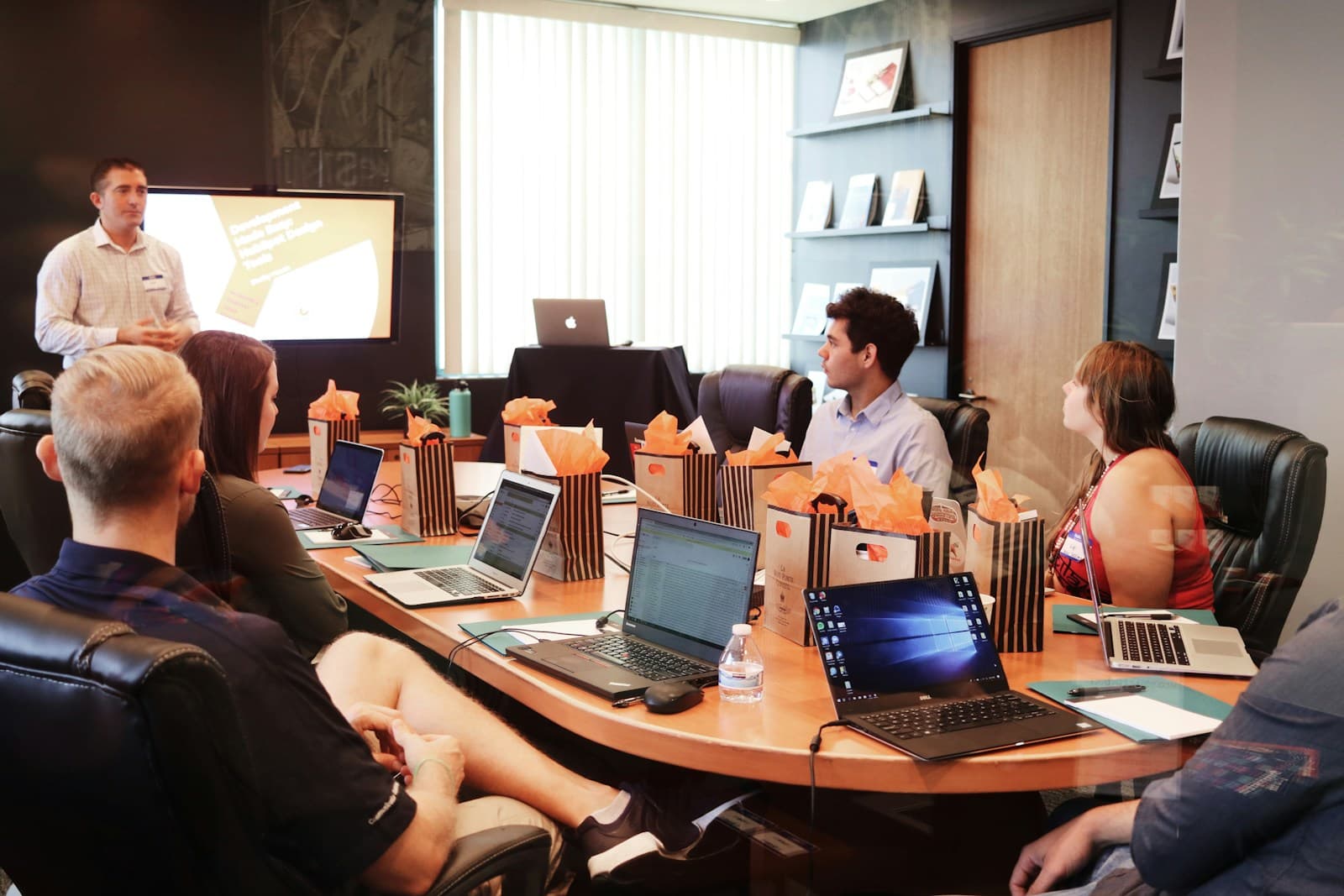
Software strategy meeting for planning custom business systems
The best software choice depends on how unique the workflow is, how much control you need and whether existing tools can support growth.
workflow match and user adoption
Fit
data, rules and ownership
Control
time to launch and change
Speed
support, scale and continuity
Risk

Software buying decisions

Not every business problem needs custom software, but some outgrow generic tools fast

A spreadsheet can be the right start. A SaaS tool can be the right shortcut. A freelancer can be useful for a narrow task. An in-house team can be ideal when software is central to the business. The problem starts when the chosen option no longer fits the workflow, data, integrations or support expectations.

This comparison page helps buyers understand trade-offs before committing budget. It is written for teams deciding whether to keep improving Excel, subscribe to an off-the-shelf tool, build custom software, hire a freelancer, work with a software company or form an internal team.

Main options

What each software route is good for

The right choice often depends on the cost of staying with the current process compared with the cost of building a better one.

Excel and manual tools

Good for early tracking, experiments and small teams. Risk grows when files become shared databases, formulas break, owners change and reporting depends on manual cleanup.

  • Fast to start
  • Weak for permissions and audit trails
  • Hard to scale across teams

Off-the-shelf SaaS

Good when your process fits the product. Risk appears when the workflow needs local integrations, custom rules, branch logic, unusual reports or data ownership control.

  • Quick deployment
  • Recurring subscription cost
  • Limited workflow flexibility

Custom software

Good when the process is unique, integration-heavy or central to operations. It gives more control, but requires proper planning, testing and long-term support.

  • Built around your workflow
  • Own data and rules
  • Needs serious delivery management

Freelancer, agency or in-house team

Each can work. The decision should consider continuity, depth, speed, documentation, security, project management and who will support the system after launch.

  • Freelancers suit narrow tasks
  • Agencies bring wider teams
  • In-house works for constant product work

When to change approach

Signs your current setup is holding the business back

The strongest signal is not frustration alone. It is when the current tool creates repeated business risk: lost leads, delayed follow-ups, duplicate records, manual reconciliation, unclear ownership, slow approvals, inconsistent reports or customer service gaps.

When those problems become normal, the business is no longer saving money by avoiding software investment. It is simply paying the cost through staff time, missed opportunities and weak control.

  • Managers cannot trust reports without manual cleanup
  • Teams copy customer data across multiple files
  • Payments, invoices, receipts or follow-ups require repeated manual checks
  • Only one person understands how the current process works

Decision guide

Compare the options side by side

Use this table to understand which route fits the reality of your workflow.

OptionBest whenRisk to watch
ExcelThe process is small, temporary and managed by one or two people.Version confusion, weak permissions, poor audit history and unreliable reports.
SaaS toolYour process matches a mature product and customization needs are light.Subscription lock-in, limited local integrations and forced workflow compromises.
FreelancerThe task is narrow, technical and easy to define.Continuity risk if documentation, testing and support are weak.
Software companyThe project needs planning, UI, backend, integrations, testing and support.Poor fit if the scope is treated casually or the buyer is not involved.
In-house teamSoftware is a core business asset with constant product work.Hiring cost, management overhead and time needed to build the full team.

How to decide

A practical way to choose

Do not choose based only on upfront cost. Choose based on workflow fit, long-term ownership and the cost of failure.

01

List the business risk

Identify what is lost when the current setup fails: leads, time, revenue, customer trust, compliance, reporting or staff accountability.

02

Check workflow uniqueness

If the process is standard, SaaS may work. If it is unique or integration-heavy, custom software may be more sensible.

03

Plan ownership

Decide who will maintain, improve and support the system after launch. This affects the right delivery partner.

Proof and trust

Proof points to consider before choosing a software route

A good comparison should lead to a practical next step. We help buyers move from uncertainty into a scoped recommendation, whether that means improving Excel, implementing a CRM, building custom software or rescuing an existing system.

The strongest estimate is not the cheapest number. It is the one that explains scope, assumptions, risk and the delivery path clearly enough for a buyer to make a confident decision.

DevOpsTech Softwares delivery approach

Comparison questions

Questions before choosing a software route

Is custom software always better than SaaS?

No. SaaS is often better when your workflow is standard and the product already solves the problem well. Custom software makes more sense when fit, integrations and control matter more.

When should we stop using Excel?

When Excel becomes a shared operational system with sensitive data, multiple users, manual reports, no clear audit trail and repeated follow-up mistakes.

Can you help us decide before we build?

Yes. We can review your current tools, workflow, data and goals, then recommend whether to improve the existing setup, buy software or build custom.

Need an estimate or a second opinion on a software decision?

Share the process, system, integration or business problem you want to improve. We will help you decide whether the next step is discovery, a quote, an audit or phased delivery.